FUTURE FOSSILS
by Tiril Frøysland
Common model & Future Fossils
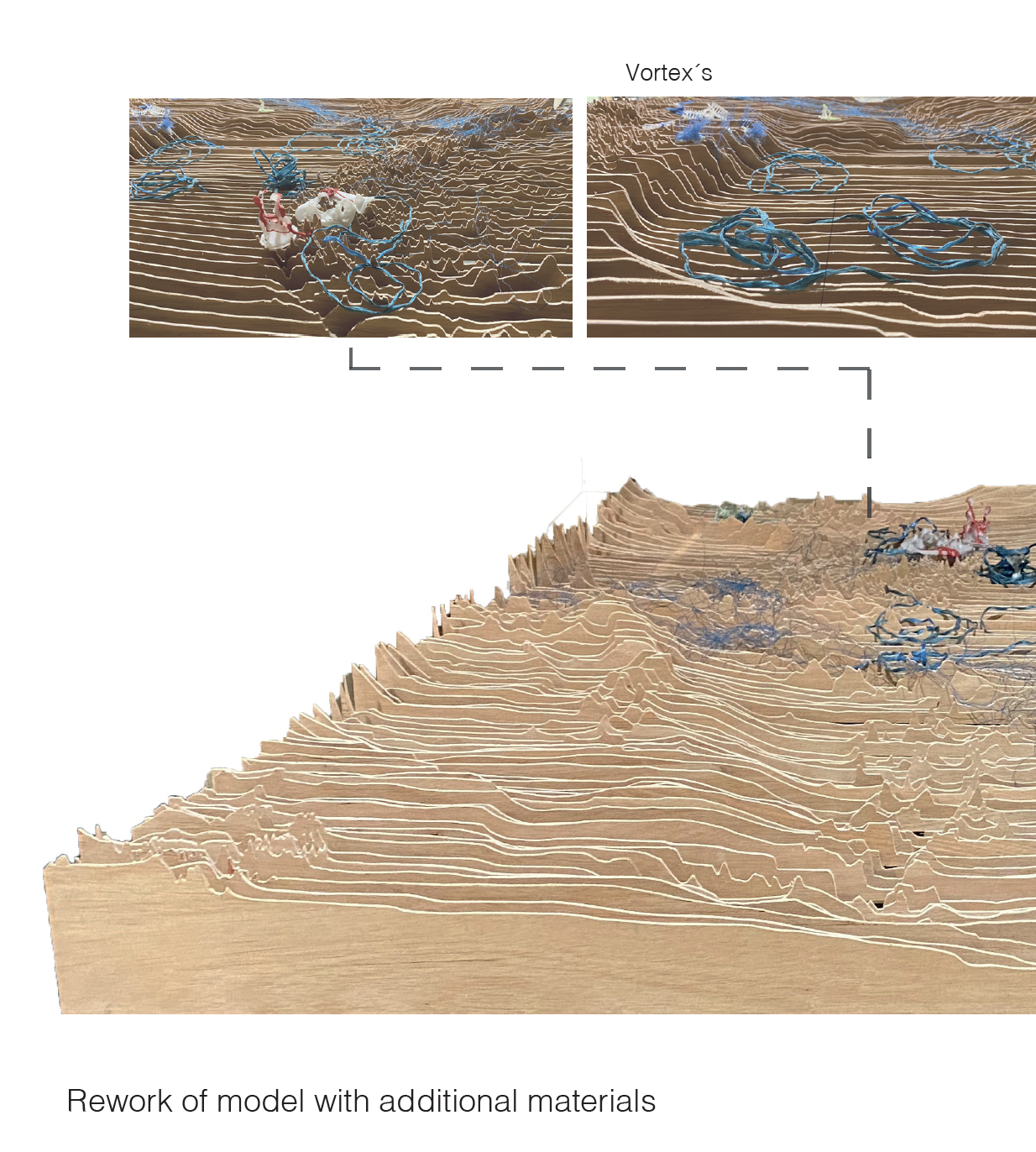
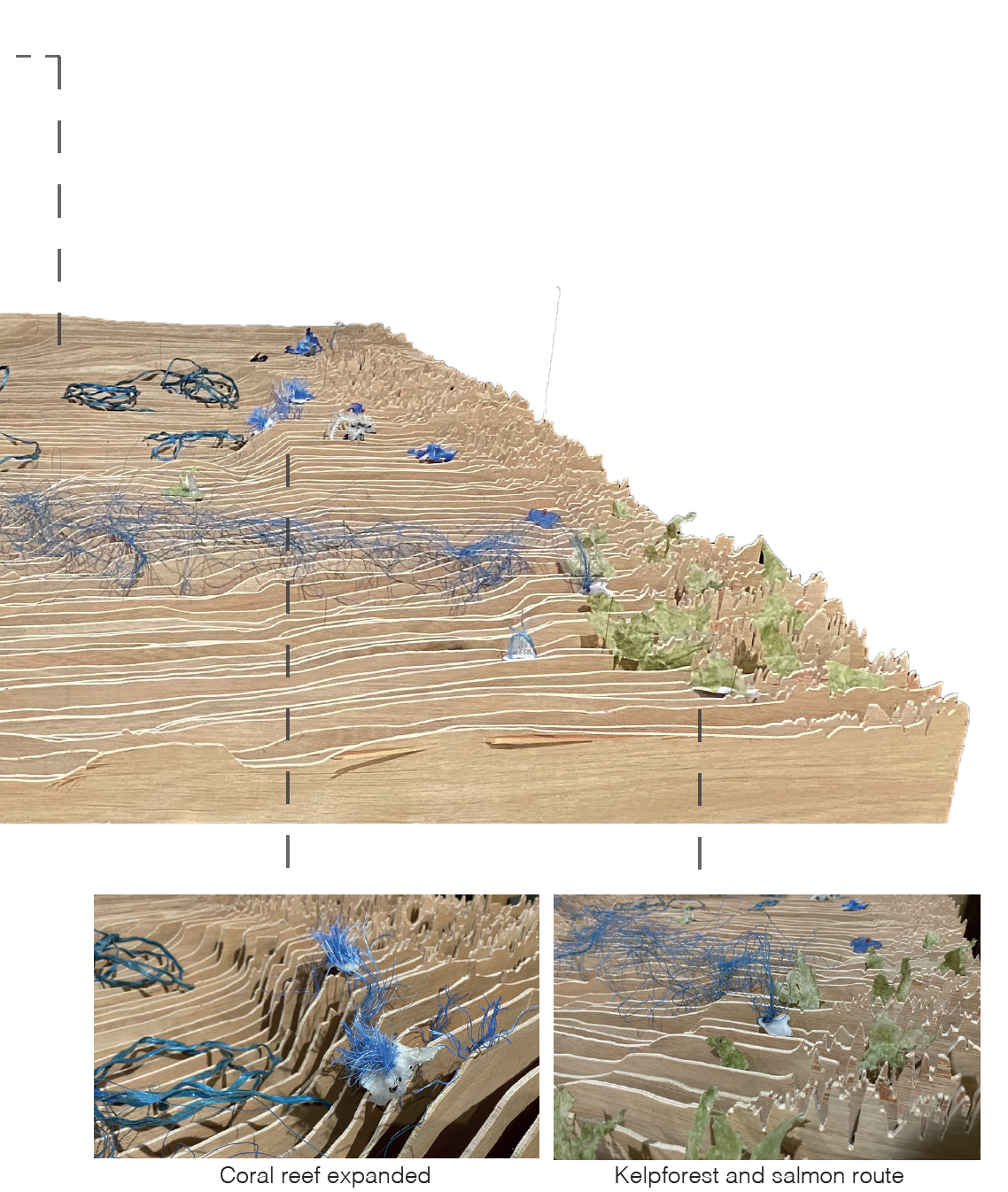
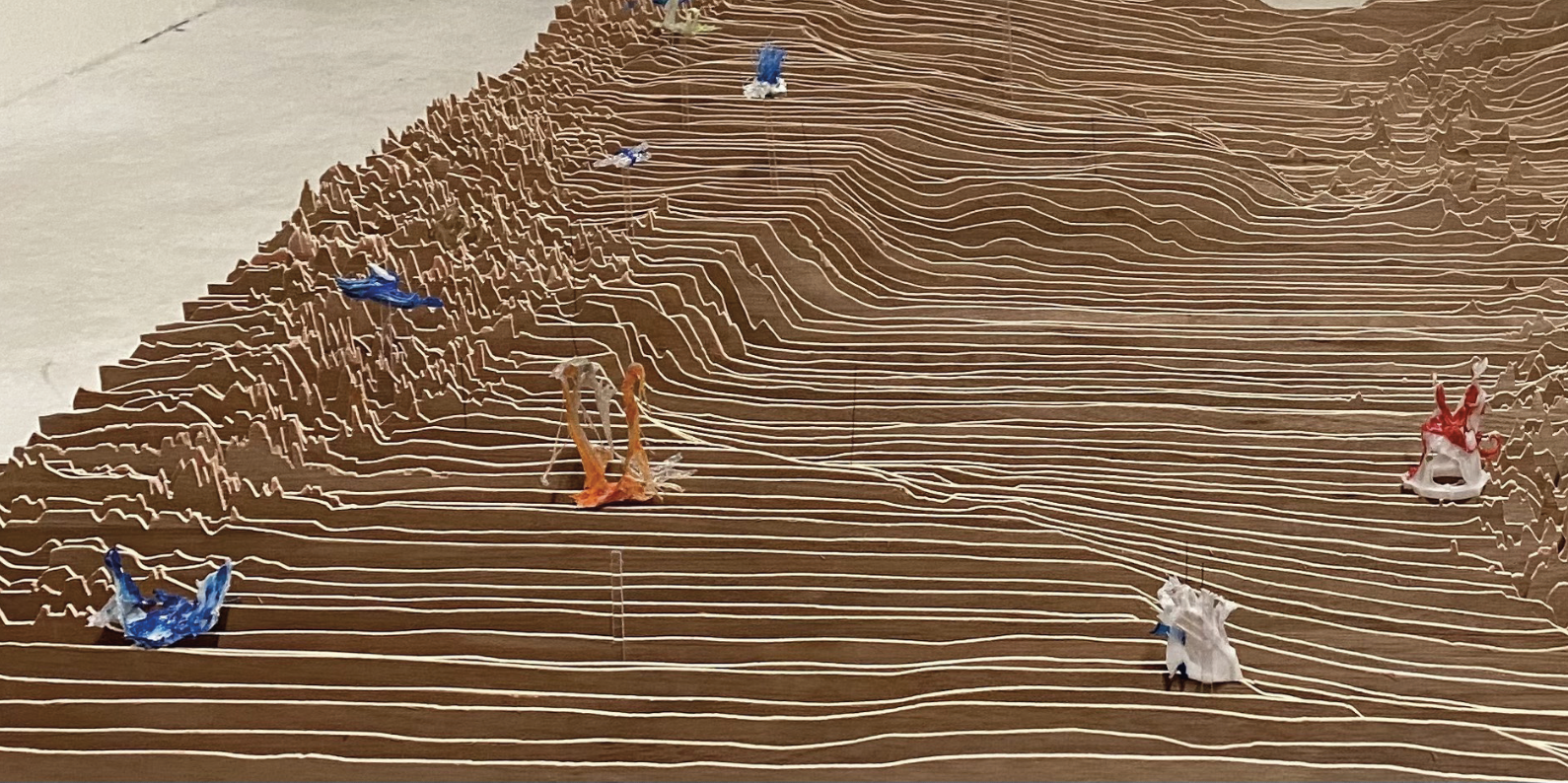
A model of the Norwegian Sea landscape is the common model for our explorations in ocean space.
The sea itself can be seen as a collection of artifacts that continuously becomes a part of a new layer in the anthropocene footprint, and the future fossils of human activity.
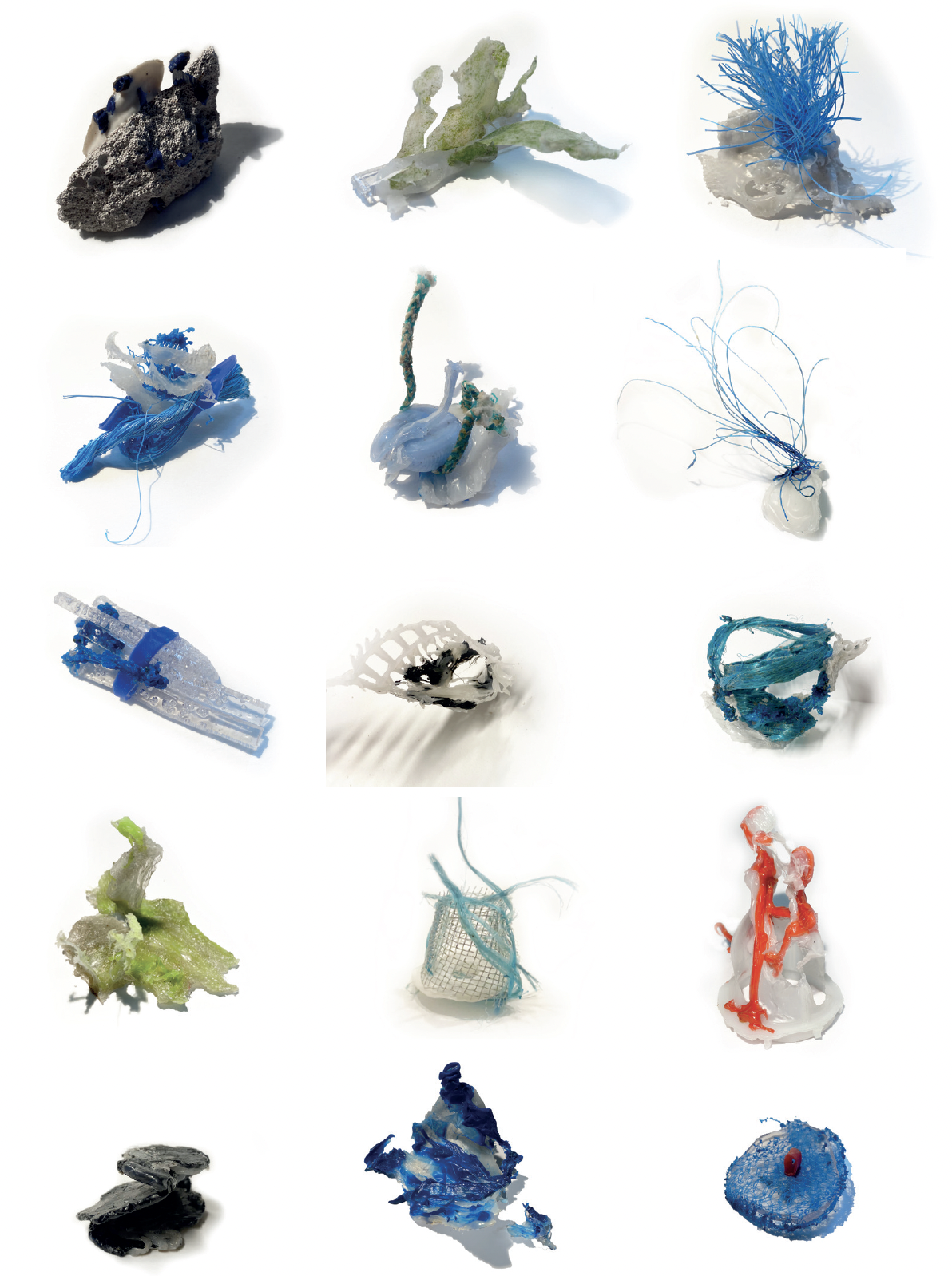
In ”Future Fossils,” I am using plastic debris to make an artifact for each of the Ocean Space projects and situating it into the common model.
Future Fossils
The sea itself is like an artifact. A fading line between the organic, natural world, and man-made elements.
Oceanographer Charles Moore first discovered the phenomenon of plastiglomerates on the beaches of Hawaii in 2006, where these man-made stones had been formed in bonfires, by molten plastic debris mixed with sand and organic materials.
The thought of the future fossils of human interventions with the ocean intrigued me. Using plastic debris collected from the bay of Rong in Øygarden to make an artifact for each of the Ocean Space projects, as the sea itself can be seen as a collection of artifacts that continuously becomes a part of a new layer in the anthropocene footprint, and the future fossils of human activity.