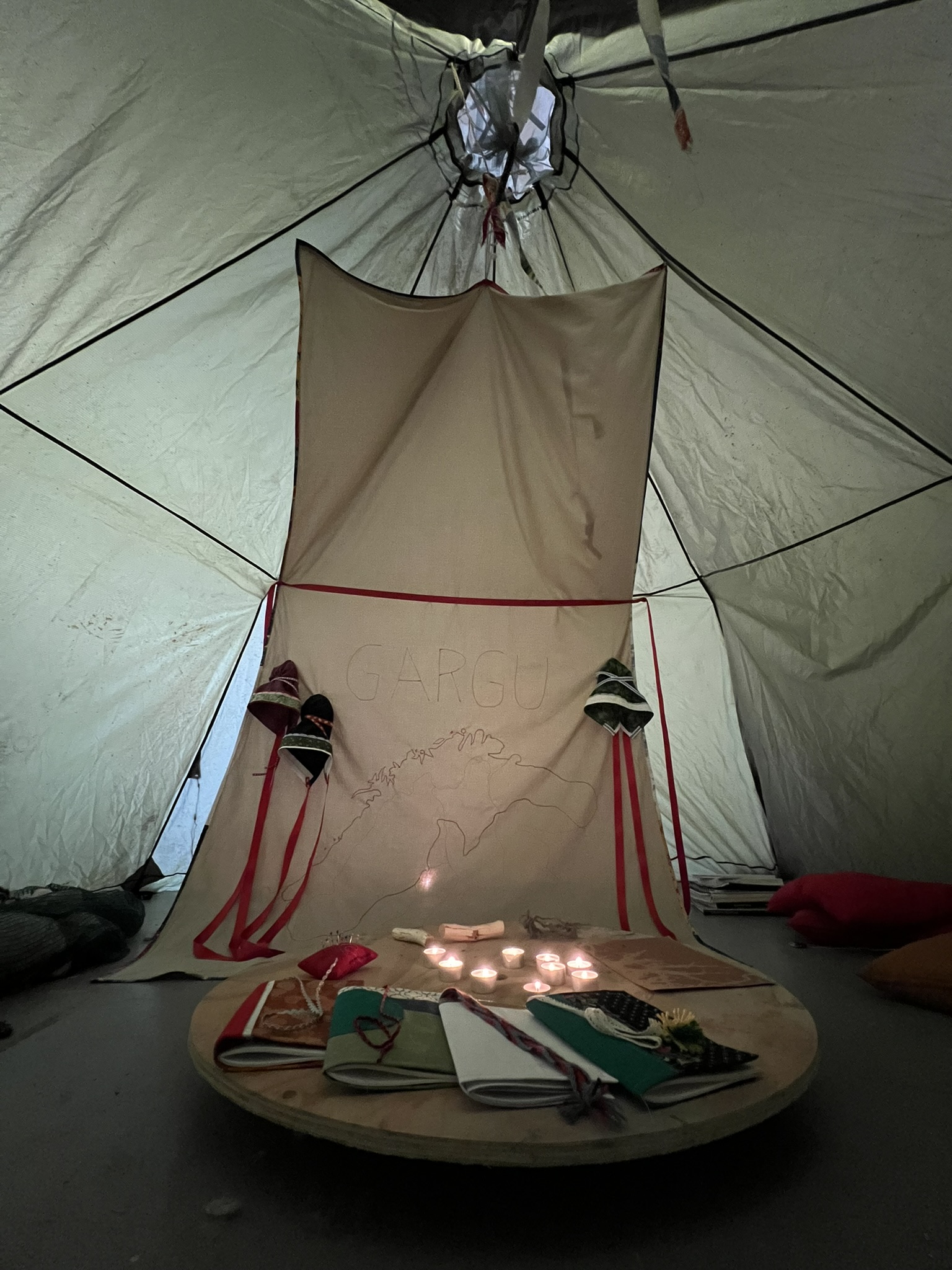
GARGU
by Trine Hansen
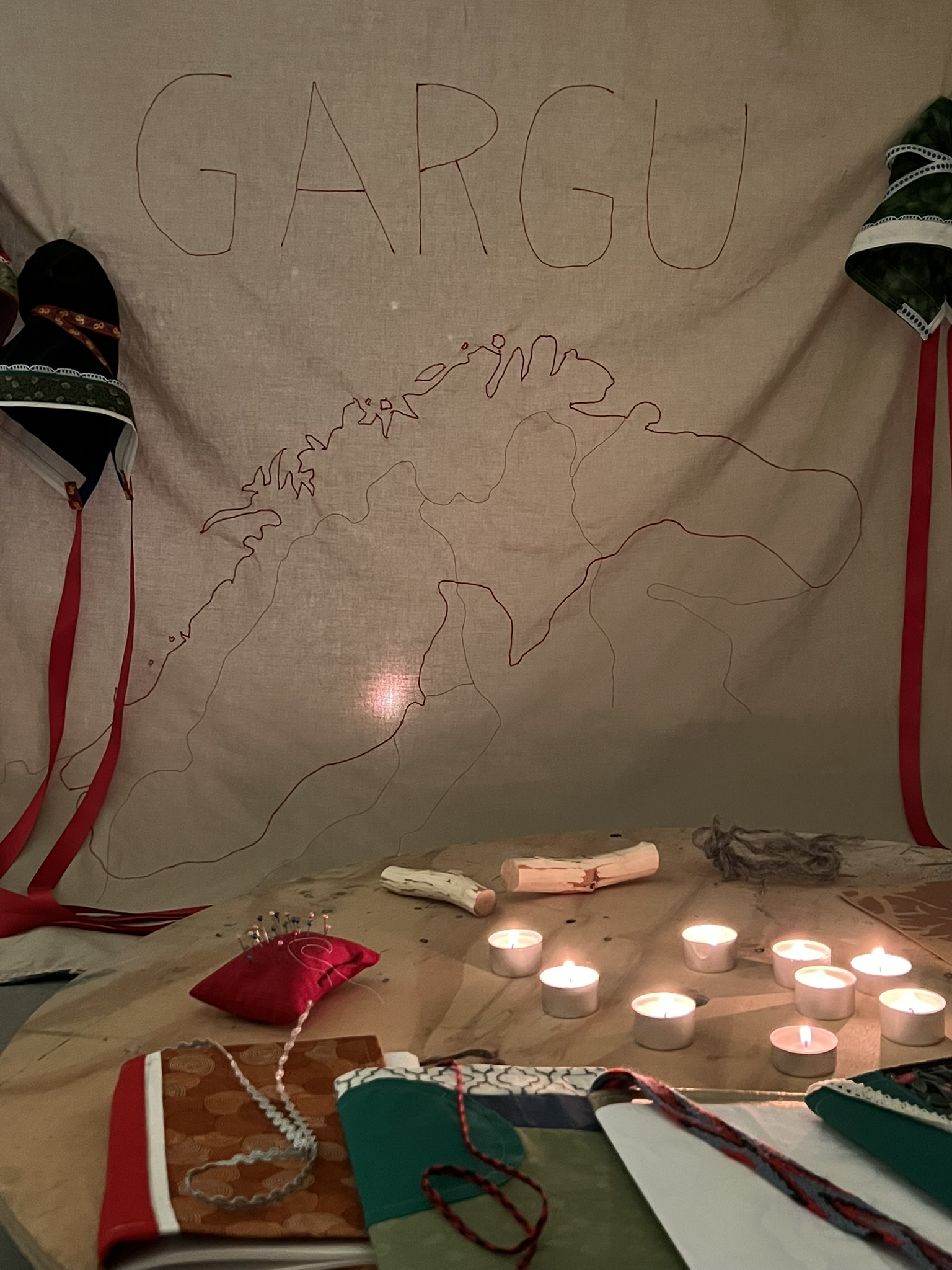
Gargu - long beach
During this course, I have explored the culture along the coast in North Troms through a Sea Sami perspective. This is an area where colonization brutally affected the Sámi people by infiltrating the area with a goal to get rid of the whole culture and language. In addition, the area is unique as all infrastructure and all houses were burnt down during the Second World War through the scorched earth tactics of the retreating German army.
In September I went on a studytrip where I visited Gáivuonbahta, Ulli, Olmáivággi and Návuotna. With me I brought a sound recorder and an idea of collecting fabrics with me from the people I met. In the beginning the project was about me getting to know the areas better and to learn more about the life and history of the Sea Sámi. With duodji, luohti and field recordings I wanted to present an alternative way of mapping.
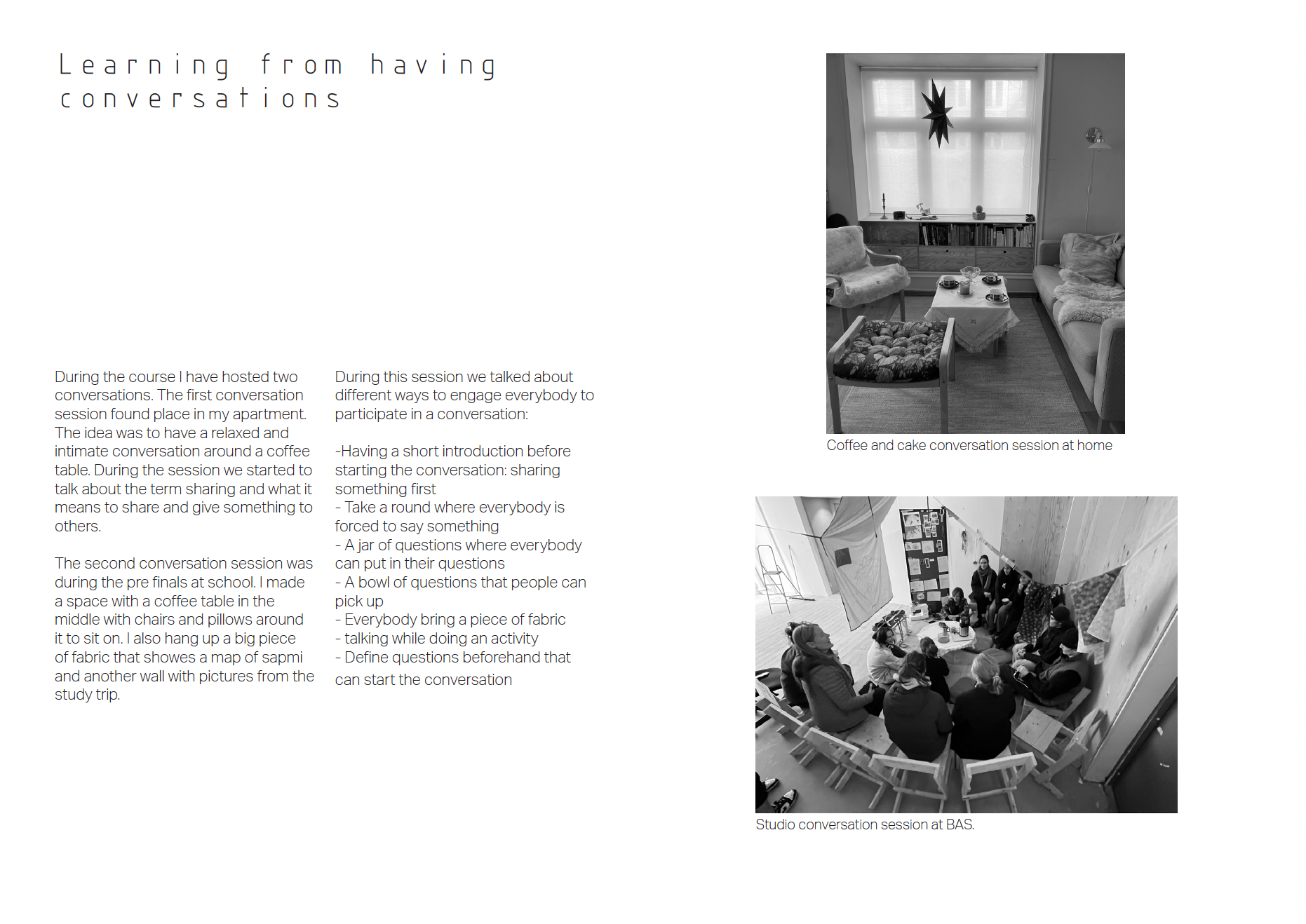
After having a presentation during the midterm, I felt a presence of insecurity within me and the group. It seemed like we all were uncertain and a bit scared of how to approach this topic, for various reasons. This made me realize that the project’s focal point should be how to engage others to participate in a conversation with Sea Sámi thematics. Instead of being the one to present the topic I wished to engage the group to collectively talk and discuss the topic together. Furthermore, I explored how space and presentation can influence a conversation.
How to create a space where everyone feel safe to contribute with their different background and knowledge? Today, there are still many in Nord-Troms who do not want to acknowledge their Sea Sami background and many do not want to talk about the areas’ connection to Sápmi. My goal is to engage more people to participate in conversations about the Sea Sámi and to normalize this topic.


Gáivuonbahta / Birtavarre
Ulli / Uløya

Summerland
Návuotna / Kvænangen