KAURA LIGHTHOUSE & OCEAN GARDEN
by Changkun Ma
There are around 161 lighthouses along the coast of the Norwegian Sea.
In the Trondheim area, the Kaura lighthouse, which is 9,000 meters from the coastline, was selected as the project prototype. The relatively isolated geographical environment of the island and the well-preserved condition of the lighthouse make it possible to transform it into a temporary artist residency, with ocean gardens
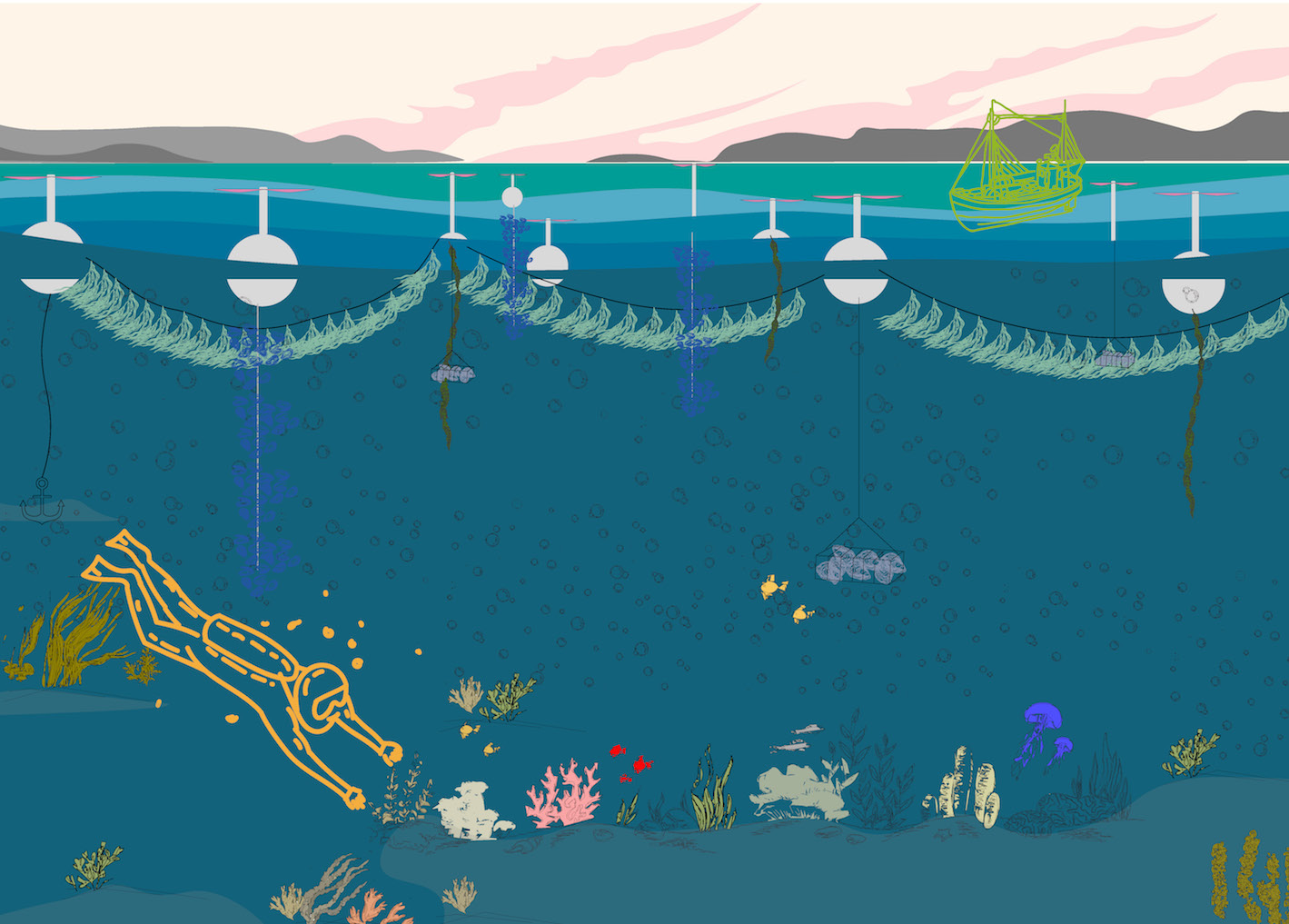
A new deck to facilitate the ship’s arrival and departure from the island and a series of recycled buoys form a new productive underwater garden, which is used to enrich marine biodiversity and purify the marine environment. The "bamboo dragonfly" on the upper part of the buoys will rotate by the flow of the wind, forming a waltz-like dance on the sea. Four larger buoys can convert wave energy into electrical energy for the daily energy consumption of the lighthouse. A series of kelp, seaweed, oysters, mussels, etc., grow along the base of the buoy, forming an underwater ocean carnival, a vertical underwater garden of different species: Kelp grows vertically, next to mussels and oysters below.
Kelp is one of the fastest-growing plants on Earth, a winter crop harvested in spring, right after scallops. Oysters are harvested year-round, while clams are harvested in spring and summer. Kelp might be considered a super plant because it can be used in many different ways- Kelp noodles, animal feed, pharmaceuticals, cosmetics, biofueling, and fertilizer. Kelp is food for many organisms and also provides shelter for many forms of sea life.
Kelp and seaweed can be planted throughout the year in about one to three months, depending on the ocean environment. Mussels and oysters are mainly planted in the spring. The main harvesting method is to get near the buoys by fishing boats, and then by stretching the ropes connected to the buoys to pull up the creatures grown in the ocean for harvesting.
Artist-in-Residence Programme
The Kaura lighthouse is pleased to offer an Artist-in-Residence Program. The program is designed to offer a period of quiet seclusion and reflection to established artists working on their craft. It offers a time to re-group from busy schedules with uninterrupted time for creative exploration and experimentation. The trails and beaches offer visitors a breath of solitude and a poetic landscape where the sea never fails to inspire.
The residency award includes two weeks of lodging and studio space. Food and transportation are the responsibility of the artist. The residency may be taken between two weeks to one month.
The lightkeeper’s residence is heated, has a kitchen, a living room with studio space, two bedrooms, and a meditation room. Public washrooms are in the basement of the building.


